

Why Hasn't That House Sold Yet? 5 Things Phoenix Buyers Should Investigate
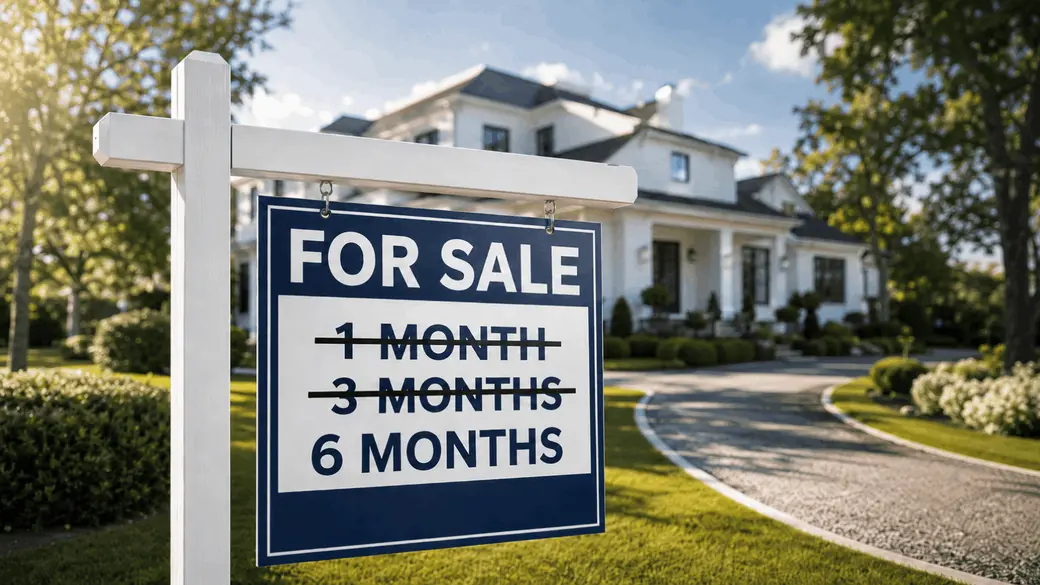
You find a Phoenix home you like, pull up the listing history, and realize it has been sitting for months.
Your first thought is usually the same one everybody has: What is wrong with it?
That is a fair question. But a long time on market does not automatically mean a home has a problem. It could be overpriced. It could have launched with dark, cluttered photos. The seller may have turned down an early offer they now wish they had taken. Or the home may simply be competing with more listings than it would have a year or two ago.
For buyers, an older listing can be an opening. The trick is knowing what to look into before you decide whether you found a deal or inherited somebody else's problem.
More Sellers Are Reducing Their Price
Homes are not disappearing the way they did when buyers had almost nothing to choose from.
Nationally, 20.4% of active listings took a price cut in August, according to Realtor.com. Around the same time, Redfin reported new listings at a four-month high while pending sales dropped to a six-month low.
Here in the Valley the pattern is even more pronounced. Redfin's most recent Phoenix data shows roughly 38% of listings with a price drop, a median of about 55 days on market, and homes closing at about 97.8% of list price. Across Maricopa County, the median days on market has been running closer to 73 days with a median sale price near $504,900.
Those are metro-wide averages, and they do not describe every neighborhood or price range. A well-priced home in Arcadia or the Sheaborhood can still draw multiple offers while an overpriced house a few miles away sits for two months.
That is why days on market is a clue, not a conclusion.
Why Hasn't the Home Sold?
Before you write an offer, find the reason the property is still available. Most older listings fall into one or more of these five buckets.
1. The Home Was Overpriced
The most common explanation is also the simplest. The seller started at a number that is too high for today's market.
Buyers compare every new listing against the alternatives nearby. If one home feels expensive for its size, condition, or location, they move on. Even after a price cut, the listing can carry the stigma of having sat.
That does not automatically make the current price a bargain. Compare it to recent closed sales, not to the original asking price, and see whether it actually reflects the market now.
2. The Listing Made a Weak First Impression
Dark photos, cluttered rooms, no floor plan, or a thin description can suppress interest even when the home itself is solid.
Some properties show far better in person than they do online. If poor marketing caused buyers to scroll past, you may have found a good home with less competition around it.
3. The Condition Is Limiting the Buyer Pool
A dated kitchen is a very different situation from an aging roof, active water intrusion, or a foundation issue.
Cosmetic work can create room to negotiate. Larger defects can affect insurance, financing, and your total cost of ownership. Read the disclosures, get the right inspections, and collect real estimates before you decide whether the price makes up for the work.
4. A Previous Contract Fell Apart
This one is the trickiest. Plenty of buyers assume that if a contract fell through, something must be wrong with the house. Sometimes that is true. Sometimes the previous buyer had a financing problem that had nothing to do with the property.
Ask why the contract ended and whether any inspection reports or repair records are available. Do not assume the worst, and do not ignore the history either.
5. The Seller's Timing Did Not Match the Market
Sometimes nothing is wrong with the property at all. A home may have listed over a holiday, during the slow stretch of a Phoenix summer, or in a week when four similar houses hit the market on the same street.
The seller may also have specific needs around their next purchase, their closing date, or when they can actually move. Understanding those priorities often lets you structure a stronger offer without paying more.
Questions To Ask About an Older Listing
Before you decide a home is either a bargain or a red flag, ask:
- How long has it been listed, including any earlier listing periods?
- Has the price changed, and if so, when and by how much?
- Has the home been under contract before?
- Why did that transaction fall apart?
- Are disclosures or repair invoices available?
- Are there any known insurance or financing concerns?
- How does the current price compare to recent nearby closed sales?
- What would the first year of ownership actually cost?
- Does the seller have a preferred closing date or another priority?
The answers are what separate a marketing problem from a property problem.
An Older Listing Does Not Mean a Desperate Seller
Time on market can strengthen your position. It does not guarantee the seller will take a low offer.
Some Phoenix sellers are sitting on years of equity and have no deadline at all. Others are already close to the minimum they need to make their own next move work. An aggressive offer with no supporting data behind it tends to end the conversation before a real negotiation ever starts.
The stronger approach is to build the offer around recent comparable sales, the condition of the property, and what the seller appears to care about most.
What This Means Across the Phoenix Metro
The national numbers say buyers have more choice than they have had in years. Real estate is still intensely local, though, and the Valley is not one market. It is dozens of them.
The leverage attached to a three-week-old listing in Gilbert can look nothing like the leverage attached to a two-month-old listing in Peoria or Queen Creek. Price range matters too. The $600K to $1.3M range in particular has been giving buyers more room to negotiate than the entry-level price points, where inventory is still tighter.
So if you are watching a home that has been sitting, do not write it off. Also do not assume it is automatically a deal. Start with its history, investigate its condition, and figure out what the property is worth to you today.
Frequently Asked Questions
How long is too long for a house to sit on the market in Phoenix?
There is no single cutoff. The median for the Phoenix metro has recently been running roughly 55 to 73 days depending on the source and the geography measured, so a listing at 30 days is normal and a listing at 90 days or more is worth a closer look. What matters more than the number is the reason behind it.
Can I get a better price on a home that has been listed for months?
Often yes, but not always. Sellers with substantial equity and no deadline may hold firm. Your leverage comes from comparable sales and condition findings, not from days on market alone.
Is a home that came back on the market a bad sign?
Not necessarily. Contracts fall apart for financing reasons as often as for property reasons. Ask directly why the previous contract ended and whether inspection reports are available.
Are home prices dropping in Phoenix right now?
Prices have been roughly flat to slightly up year over year while the share of listings taking a price cut has climbed. That combination means more negotiating room on individual homes rather than a broad decline.
Thinking About Making an Offer on a Listing That Has Been Sitting?
This is exactly the kind of situation where the numbers matter more than the story. I can pull the full listing history, the closed comps, and the actual days-on-market picture for that specific neighborhood so you know whether you are looking at an opportunity or a pass.
Book a strategy call with me and my team and let's talk through it.
Caitlin
Recent Posts







GET MORE INFORMATION

Broker Associate BRBR679010000