

Phoenix Housing Market Update, July 2026: New Construction, Case-Shiller, and What It Means for You
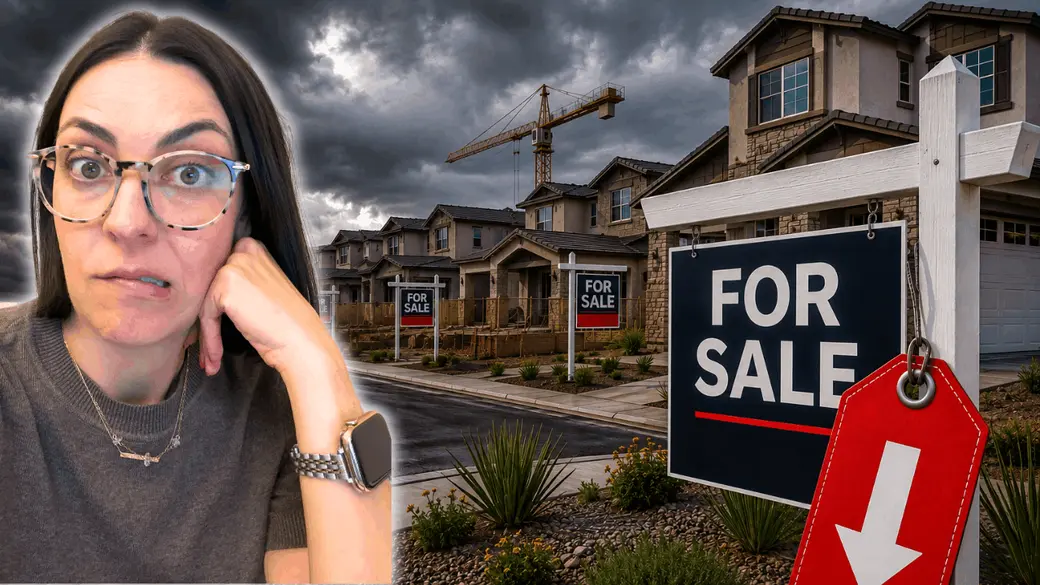
Is there trouble on the horizon for new construction? That is the big question this week. New home sales just slid to multi-year lows nationally, one of the country's largest builders has rolled its prices back to 2017 levels, and the latest Case-Shiller numbers show Phoenix softening. Here is what all of it means if you are thinking about buying or selling in the Valley.
If you are wondering "are home prices dropping in Phoenix," the short answer is that resale prices are holding fairly steady while the pressure is showing up in new construction and in the slower-moving Case-Shiller data. The bigger story is affordability: there is plenty of demand, but fewer buyers who can act on it at today's rates. Below is the full breakdown of new construction, builder pricing, seller concessions, Case-Shiller, mortgage rates, and where each Valley city stands.
New home sales just hit multi-year lows
New home sales weakened again in May. Sales of new single-family homes fell to a seasonally adjusted annual rate of 580,000, down 7.3 percent from April and 6.8 percent from a year earlier, so they are down meaningfully both month over month and year over year. This is national data, not Phoenix specific.
At the same time, new-home inventory kept building, rising to 496,000 homes for sale. That pushed months of supply for new construction to 10.3 months, up from 9.3 in April and about 7.7 a year ago. Months of supply is simply how long it would take to sell every home currently for sale at the current pace of sales if nothing new came on the market. A balanced market usually sits around six months, so 10.3 months of new-home supply is firmly a buyer's market, because there is far more inventory than buyers are absorbing.
One nuance worth keeping in mind: new home sales data is notoriously choppy month to month and prone to significant revisions. Existing (resale) home sales are running at an annual pace over 4 million compared to just under 600,000 for new homes, and resales have actually trended modestly higher in recent months. In other words, for now the slowdown looks isolated to new construction.
Builders like Lennar are competing hard on price
Here is the headline that surprised a lot of people. Lennar's average sales price for homes delivered in the second quarter of 2026 was about $371,000, a level the company had not seen since early 2017. That is one of America's largest builders rolling prices back nearly a decade in nominal terms.
This was a deliberate choice to compete on price. Lennar still delivered 2,519 homes in the quarter, a 2 percent increase year over year, and kept its full-year guidance of 82,000 to 83,000 homes. That roughly $371,000 average reflected about 12.9 percent in incentives plus base-price adjustments to keep volume moving. The strategy is volume now, margin recovery later. Builders can do this in part because construction costs are down about 13 percent over the past two years and build times have hit a record low of around 121 days.
For a buyer, the math is real. A $371,000 home financed at 6.47 percent on a 30-year loan runs roughly $2,340 a month, while a similar home priced closer to $412,000 lands nearer $2,600 a month, a difference of about $260 a month. That is exactly the gap builders are trying to close with price cuts and rate buydowns.
Affordability is the real constraint
Even with lower prices and generous incentives, the challenge is not really a shortage of homes. Qualifying for a mortgage on the median existing home at today's rates takes an annual household income of about $95,000, which is well above what most first-time buyers earn. First-time buyers now make up just 21 percent of the market, the lowest share in 44 years.
There is a widely cited nationwide shortage of about 1.2 million housing units, yet builders are still working to sell what they have. The honest way to put it is that there is no shortage of demand, there is a shortage of buyers who can afford to act on it. I talk with people every week who would love to buy but cannot make it work right now, and others who are ready and able. Both realities are true at once.
Housing starts and Phoenix permits are pulling back
Builders are responding by slowing down. Nationally, privately owned housing starts fell 15.4 percent to a seasonally adjusted 1.177 million, which is 8.7 percent below May 2025. Most of that drop came from multifamily, one of the largest single-month declines on record, while single-family starts slipped a much smaller 1.9 percent. Total building permits fell 7.7 percent. (I will dig deeper into the multifamily and rental picture next week with a guest.)
Here in the Valley, permits tell a similar story. Multifamily permits are running around 3,300 so far this year, compared with about 15,000 last year and 14,000 the year before. Single-family permits sit near 9,800 at the halfway point of the year, versus roughly 24,000 last year and 29,000 the year before. Builders appear to be pulling back to avoid overbuilding as demand cools.
Seller concessions keep climbing
On the resale side, seller concessions are still rising. A seller concession is money the seller credits the buyer to cover closing costs or buy down the rate, which makes the purchase more affordable without necessarily lowering the sale price (though the two can be combined). Nationally, 46 percent of sellers gave concessions in May, the highest share on record for that month (it was 27 percent in 2021 and 23 percent in 2022).
Phoenix is running even higher. Over the last 30 days, about 54.9 percent of Valley sales included a concession, with a median concession of $10,000. It varies a lot by price range, though. For sales under $400,000, roughly 66 percent had concessions. Between $500,000 and $1 million, it was 48.6 percent with a median concession of $11,500. From $1 million to $3 million, just 26.7 percent. Concessions are more common in lower price ranges, often because a first-time buyer needs help to qualify.
Case-Shiller shows Phoenix softening
The Case-Shiller Home Price Index is a look-back measure, so it is dated by design. This report covers sales from February through April 2026, with the typical sale closing back in mid-March, and it does not include May 2026 onward. Even so, it is worth a check-in.
Phoenix came in down about 0.05 percent from the prior month's reading and slipped from 18th to 19th place among the major metros, while the national average was up 0.77 percent. Year over year, Phoenix is at negative 1.65 percent, holding 15th place, compared with a U.S. average of positive 0.85 percent. After adjusting for inflation, 18 of the 19 tracked cities have lower home prices than a year ago. So the dated data confirms what we are seeing on the ground: some gentle softening in Phoenix.
Where Phoenix mortgage rates are right now
Rates have not moved much. The 30-year fixed sat at 6.54 percent as of Wednesday this week, just under 6.6 percent, and it has hovered around 6.5 percent for a while. Rates climbed at the end of February and have stayed elevated since. There has also been talk of the Federal Reserve raising the federal funds rate later this year. That is not the mortgage rate and does not move it directly, but that kind of news moves the markets that mortgage rates follow. For now, I am not expecting a lot of movement, likely not even this quarter, though time will tell.
Phoenix market snapshot (as of July 2026)
30-year fixed mortgage rate: about 6.54 percent, just under 6.6 percent
New-home sales (national): 580,000 annual pace, down 7.3% from April and 6.8% year over year
New-home months of supply (national): 10.3 months (about 6 is balanced)
Lennar average delivered price: about $371,000, with roughly 12.9% incentives
Phoenix seller concessions (last 30 days): about 54.9% of sales, median $10,000
Case-Shiller Phoenix: down about 0.05% month over month, negative 1.65% year over year
Cromford Market Index: 81.4 (below 90 signals a buyer's market); demand about 16% below normal, supply about 3% above normal
Read together, this points to a buyer-leaning market where the softness is concentrated in new construction and the outer-Valley cities with the most building. Strategy, pricing, and knowing your specific city and price band matter more than any single headline number.
What this means if you are buying
You have real room to negotiate, especially in new construction, where builders are offering price cuts, closing-cost help, and rate buydowns to move inventory. New construction is not the right fit for everyone, since it often sits farther from the core and the floor plans do not suit every buyer, but the incentives are meaningful right now. On the resale side, it is reasonable to ask for concessions, particularly under $400,000 where about two-thirds of sales include them. Run your real monthly payment at today's rates before you shop, and remember a concession or buydown can lower your cost even when the price does not move much.
What this means if you are selling
If you have a resale home in one of the high-growth, new-construction-heavy areas, price and preparation matter more than ever, because you are competing directly with builders offering sub-$400,000 pricing and aggressive rate buydowns. Expect buyers to ask for concessions and build that into your strategy from day one rather than being surprised by it. Across the Valley, the Cromford Market Index is at 81.4, with cities like Gilbert through Fountain Hills still reading as seller's markets, while outer areas such as Queen Creek, Buckeye, Maricopa, San Tan Valley, and Surprise lean toward buyers, many of them the same places with heavy new construction. Several cities sit closer to balanced, and Tempe recently swung about 17 percent month over month from a seller's market into balance.
Frequently asked questions about the Phoenix market
Are home prices dropping in Phoenix?
Resale prices are holding fairly steady, but the Case-Shiller index shows Phoenix down about 0.05 percent month over month and negative 1.65 percent year over year, so there is some gentle softening. The clearest price cuts are in new construction, where builders are competing hard on price.
Is it a buyer's or seller's market in Phoenix right now?
Overall it leans toward buyers. The Cromford Market Index is at 81.4, and anything below 90 is considered a buyer's market, with demand about 16 percent below normal. It varies by city, though, with places like Gilbert and Fountain Hills still favoring sellers.
Should I buy new construction or resale in Phoenix?
It depends on your lifestyle and location needs. New construction is offering strong incentives and rate buydowns right now and can pencil out well, but it often sits farther out and the layouts do not suit everyone. Resale gives you more location choice, and concessions are common there too. Running the numbers on both is the smart move.
What are mortgage rates in Phoenix right now?
The 30-year fixed was around 6.54 percent as of this week, just under 6.6 percent, and has hovered near 6.5 percent for a while. There is talk of a possible Fed move later this year, but rates have been fairly stable.
Should I ask for seller concessions when buying in Phoenix?
In this market, yes, it is reasonable. About 54.9 percent of Phoenix sales in the last 30 days included a concession, with a median around $10,000, and the share is even higher, near 66 percent, for homes under $400,000.
Thinking about buying or selling in the Phoenix area?
Whether you are weighing new construction versus resale, wondering what your home would sell for against all this builder competition, or just want to understand your numbers at today's rates, I am happy to walk you through it for your specific city and price range. Book a strategy call with me and my team and we will map out your options together, no pressure. Prefer to start with data? Send me a message for a custom market breakdown, or ask for the list of Valley builders offering the best incentives right now.
Caitlin McKeague, Associate Broker, Desert Dreamers Real Estate, brokered by Real. Serving Phoenix, Scottsdale, Paradise Valley, and the surrounding Valley.
Recent Posts





GET MORE INFORMATION

Broker Associate BRBR679010000